In 1981, IBM launched the Personal Computer and accidentally created Microsoft. The company that understood computing better than anyone handed the most valuable layer of the stack - the operating system - to a software vendor it barely noticed. IBM kept building machines. Microsoft became the platform.
The mistake was not technical. IBM’s engineers were world-class. The mistake was strategic. IBM assumed that value would remain anchored in the same layer of the stack even as the stack itself evolved. They believed hardware would continue to be the high ground. They were wrong.
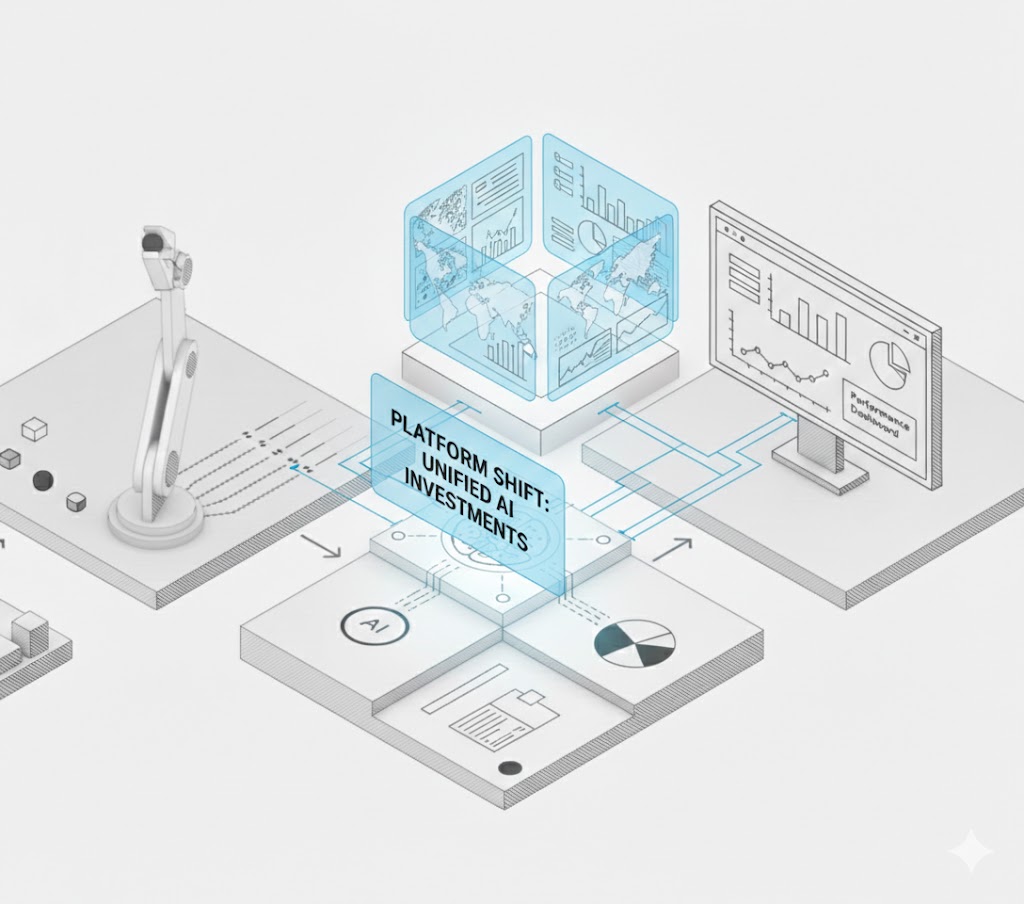
A similar misreading is now unfolding across enterprise software. The recent market reaction to incremental advances in agent platforms was not about a sudden technical breakthrough. It was about a growing realization that when software agents can execute workflows directly inside enterprise systems, the layer of the stack that captures economic value shifts. This is not a story about software collapsing. It is a story about value migrating.
In investment operations, this migration is already visible. The workflows that govern diligence, reporting, reconciliation, compliance, and ongoing oversight are being reshaped by systems that can act across documents, data sources, and operational tools. The implication is not that institutions no longer need software platforms, but that the nature of those platforms is changing. The firms that assume value will continue to accrue to the same surfaces and pricing models as before are at risk of repeating IBM’s mistake.
What Is Actually Changing
The popular narrative frames this moment as a clean break: agents replace SaaS, interfaces become obsolete, and per-seat pricing collapses. This framing is seductive because it is simple. It is also misleading. In real institutional environments, particularly in financial services, software is not being replaced wholesale. It is being restructured.
Certain categories of software weaken because they exist primarily to mediate between a single user and a database. Much of the manual surface area in investment operations falls into this category. The first-pass population of due diligence questionnaires, the manual extraction of figures from audited financial statements, the repetitive normalization of reports into internal formats, and the constant re-keying of data across systems are all artifacts of a world where automation was expensive and brittle. As agents become capable of capturing and routing this information directly, the value of interfaces designed purely for single-user data manipulation erodes.
At the same time, other layers of the stack become more valuable. Systems of record, far from being disintermediated, gain importance. Agents amplify data quality problems rather than masking them. In high-stakes environments, bad data does not merely lead to inefficiency; it creates operational and regulatory risk. As automated systems begin to draft investment materials, review financials, and populate oversight workflows, the premium on clean, canonical, auditable data increases. The system that owns the source of truth becomes more central to the operation of the firm, not less.
The Emergence of Orchestration as Infrastructure
The most underappreciated shift in the current transition is the rise of orchestration as a distinct layer of value. As soon as multiple specialized agents are involved in a workflow, coordination becomes the defining problem. In investment operations, workflows are not linear tasks that can be delegated to a single tool. They are sequences of interdependent activities that span financial analysis, document review, compliance checks, and human judgment. Without orchestration, agents remain isolated utilities. With orchestration, they become part of an operational system.
This is where Romina Day is intentionally positioned. Rather than treating agents as standalone features, Romina Day functions as a multi-agent orchestration layer designed around how institutional investment workflows actually operate. The platform coordinates specialized agents across diligence, AFS review, NAV workflows, research, and ongoing oversight, while integrating into existing systems of record. The value is not in any single model invocation. It lies in the encoded operational logic: how work moves through the organization, where controls must exist, and how accountability is preserved.
In this sense, orchestration is not a thin abstraction on top of AI models. It is infrastructure for execution. It determines whether automation produces reliable leverage or brittle complexity. Firms that underestimate this layer risk deploying agents that work in isolation but fail in production environments where process discipline, governance, and accountability matter.
Interfaces Do Not Disappear, They Change Role
Much of the rhetoric around agents assumes that interfaces become obsolete once machines can act directly through APIs. This assumption collapses in regulated, multi-stakeholder environments. The interface does not disappear; its function changes.
In investment operations, the interface is no longer primarily a surface for data entry. It becomes a surface for review, interpretation, and governance. As agents draft outputs and execute routine steps, humans shift toward overseeing high-stakes decisions. This requires interfaces that surface reasoning, highlight anomalies, trace data provenance, and support escalation and approval. The work of judgment does not vanish; it becomes more concentrated.
The design of these interfaces is not a generic UX problem. It is a domain problem. A portfolio manager reviewing agent-generated diligence notes needs different affordances than an analyst populating a form. Trust is built through transparency into how outputs were produced and where uncertainty remains. In this sense, the interface becomes part of the governance layer of the system, not merely a convenience layer on top of automation.
The Re-internalization of Services
One of the quieter but more consequential shifts enabled by agentic systems is the re-internalization of work that has historically been outsourced. For decades, investment firms have relied on external service providers for large portions of their operational load: fund administrators handling reconciliations and NAV support, consultants running due diligence processes, third-party analysts populating questionnaires, and offshore teams performing document normalization and data extraction. This outsourcing model emerged not because these activities were strategically core, but because they were operationally heavy, repetitive, and difficult to scale internally without building large, specialized teams.
As multi-agent systems mature, that calculus begins to change. The combination of orchestration, domain-specific automation, and human-in-the-loop oversight allows firms to bring significant portions of this work back inside the organization without recreating the cost structures that originally drove outsourcing. What was once labor-intensive can increasingly be handled by agentic workflows supervised by a smaller number of domain experts. The result is not simply cost reduction, but a structural shift in where institutional knowledge lives.
This re-internalization has strategic implications. When critical operational workflows live primarily with external providers, firms lose visibility into the mechanics of their own processes. Over time, operational expertise atrophies internally and becomes embedded in vendor relationships. By contrast, when these workflows are orchestrated within the firm’s own operational stack, institutional knowledge remains internal, even as much of the execution is automated. The firm becomes less dependent on external service providers for day-to-day operational competence and more capable of evolving its own processes over time.
There is also a governance dimension to this shift. Outsourced services introduce layers of opacity and additional risk surfaces, particularly in regulated environments where accountability and auditability are paramount. Agentic systems operating within the firm’s own infrastructure can be instrumented for observability, policy enforcement, and audit trails in ways that are difficult to achieve across organizational boundaries. This does not eliminate the role of external partners entirely, but it changes their function from being the default execution layer to becoming complementary specialists where true external expertise is required.
For platforms like Romina Day, this dynamic is central. The value is not merely in automating tasks that were previously performed by service providers, but in giving firms a way to internalize operational capability without rebuilding large manual teams. Over time, this reshapes the operating model of the institution itself. Services that were once externalized because they were operationally burdensome can become native, automated, and governed parts of the firm’s internal stack, changing both cost structures and the strategic locus of control.
Governance as a First-Class Layer
As agents move from experimentation into production, governance shifts from being a compliance afterthought to being a foundational layer of the stack. When autonomous or semi-autonomous systems participate in investment workflows, institutions must be able to answer basic questions about identity, authorization, and accountability. Which agents exist within the firm? What data can they access? Which actions can they take without human approval? How are their outputs evaluated against firm standards?
These are not abstract concerns. They are operational necessities in regulated environments. Firms that treat governance as something to bolt on after deploying agents will struggle to earn internal trust and regulatory comfort. Firms that design governance into the core of their orchestration layer will be able to scale automation responsibly. This is one of the reasons Romina Day treats auditability, evaluation, and policy enforcement as first-class concerns rather than auxiliary features.
From Tools to Operational Partnership
The deeper shift underway is not simply technological. It is relational. Institutions are moving from buying tools to forming partnerships around operational infrastructure. The complexity of investment operations means that no generic platform can simply be dropped in and expected to transform workflows. Real leverage comes from systems that are shaped by the specific processes, controls, and constraints of the firm.
Romina Day’s positioning reflects this reality. The platform is designed to sit inside existing operational environments, integrating with current systems of record rather than attempting to replace them. The value is created through deep domain immersion in diligence processes, financial review, NAV workflows, and ongoing oversight. This is not a vendor selling features. It is an infrastructure partner encoding operational knowledge into software.
The Long Arc of Adoption
Despite the intensity of recent attention, the transition to agentic operations will not be instantaneous. Previous platform shifts in enterprise software unfolded over decades rather than quarters. Cloud computing took more than a decade to reach majority adoption in large enterprises. SaaS followed a similar curve. The deployment of agentic systems in investment operations will likely follow the same pattern. Early adopters will move into production first. The majority will proceed through pilots and controlled rollouts. The laggards will wait for standards and best practices to stabilize.
This matters because it reframes the opportunity. The winners will not be those who chase short-term hype cycles, but those who build durable infrastructure aligned with how institutions actually operate. The migration of value across the stack is gradual, but it is directional.
Where the Value Will Settle
The firms that succeed in this transition will not be those that proclaim the end of SaaS. They will be those that understand which layers of the stack strengthen, which weaken, and which emerge as net-new categories. Systems of record deepen their moats. Orchestration becomes a central platform layer. Governance becomes infrastructure rather than overhead. Interfaces evolve into surfaces for judgment and oversight rather than data entry.
The easy era of building thin wrappers around models is ending. The harder era of building real operational infrastructure is beginning. For institutions that live and die by execution quality, this shift is not a threat. It is an opportunity to re-architect the foundation of how work actually gets done.